Why start with first aid instead of your resume?
Because for the first 72 hours after a layoff, you are not making decisions the way you normally would. Acute stress measurably impairs executive function, and executive function is exactly what resume writing, role targeting, and salary negotiation run on. A layoff also lands directly on your sense of your own worth, and it is very hard to write a convincing account of your work while you are privately unconvinced by it.
So the first move is not to produce anything. It is to sit down and rebuild your footing from evidence you already have: what you built, what you shipped, what you carried. Then decide where you want to go. Then plan how to get there. That order is the MePlan 3-Step Process: Locate, Aim, Navigate.
What the first 72 hours actually do

The standard layoff advice is a task list. File for unemployment. Update your resume. Tell your network. Start applying. Every item on it is reasonable. The problem is the assumption underneath: that you are in a state to do them well.
A 2016 meta-analysis by Shields and colleagues found that acute stress impairs core executive functions, and linked the effect to stress hormone activity in the prefrontal cortex. The findings are not uniform, and some measures of working memory hold steady or even sharpen under stress. But planning, evaluating options, and holding several futures in mind at once are precisely the capacities that get less reliable.
Those are the capacities a job search is made of.
The second thing a layoff does is quieter and does more damage. It arrives feeling like a verdict on your worth, even when you know the layoff was structural and had nothing to do with your work. And the entire job search asks you to argue, persuasively and repeatedly, that you are valuable. Doing that from a position you do not currently believe is not a motivation problem. It is a sequencing problem.
This is why the free kit is 10 pages and not 40. In the first week, a thick workbook is the wrong thing to hand someone. What helps is a short, finishable thing you can complete in one sitting and close.
So what is the right order?
Confidence first, then direction, then strategy. Not because confidence is a nice feeling to have, but because the two steps after it produce garbage without it.
-
Step 1
Locate
Where I am
Start with what is already true and already yours. What you built, shipped, fixed, and carried. Not to feel better in a vague way, but because you cannot describe your value to anyone else while you are still arguing with yourself about whether you have any.
-
Step 2
Aim
Where I want to go
Only once your footing is back does this question produce a real answer. Ask it in the first 48 hours and you will get fear talking: whatever is open, whatever pays, whatever ends the discomfort fastest.
-
Step 3
Navigate
How to get there
Now the resume, the pitch, the outreach, the 90-day plan. All the things the internet told you to do on day one. They work here, because now they have something to point at.


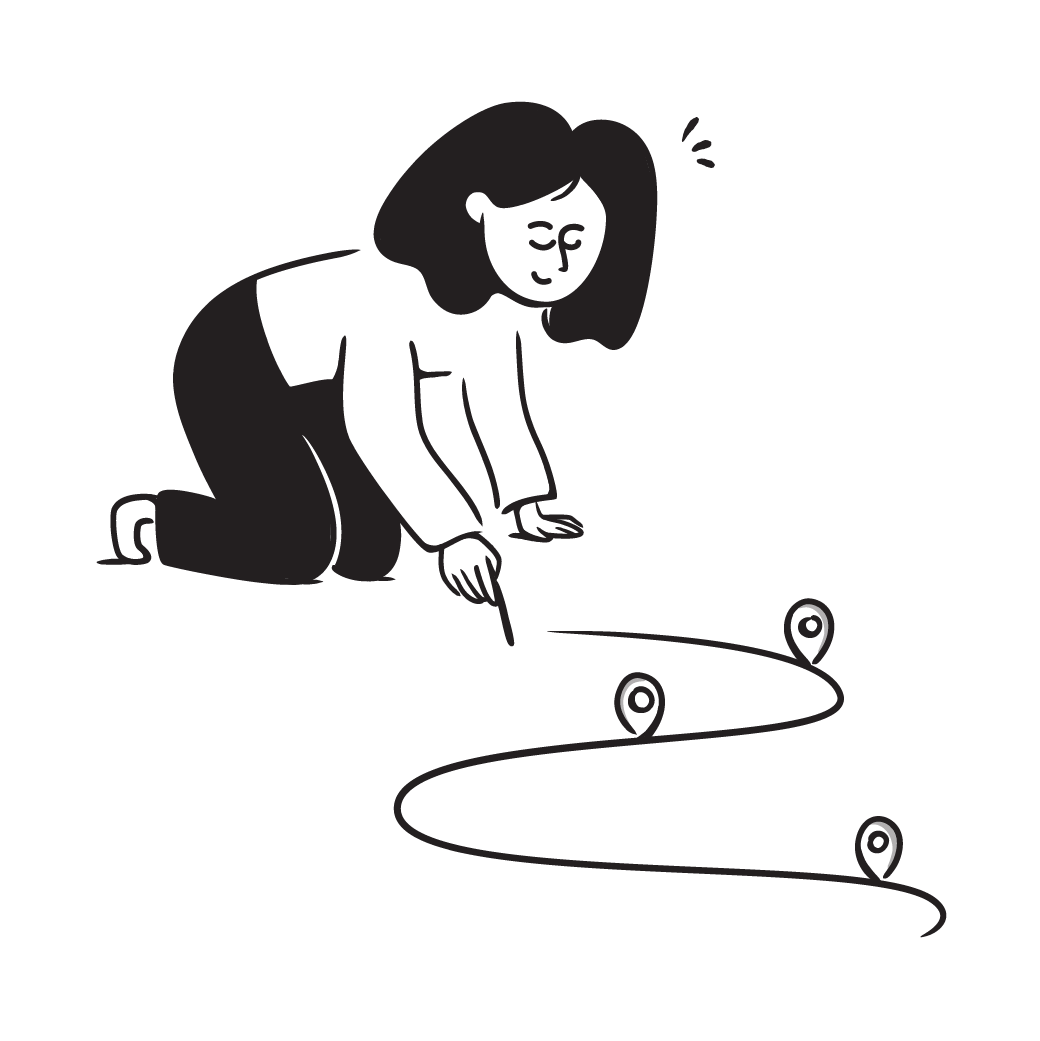
Most people start at step 3 because it is the only step that looks like progress. Updating a resume feels productive. It produces a file. Sitting with a page that asks what you actually did last year feels like stalling, right up until you notice you can suddenly answer interview questions you could not answer a week ago.
Why the first aid kit is free

I have been through this. People helped me when I was in it, and that help was not invoiced.
I do not want to charge someone for first aid while they are still in crisis mode.
So the 10-page kit is free, complete on its own, and requires no signup and no email address. It is not a sample with the useful parts removed. It is the whole first step.
The 40-page Career Bounceback Kit is the paid one, and it is for a different moment: when the shock has passed and you want to do real wayfinding on where this career goes next. That is a decision worth making when you are steady, not in the first week. If the free kit is all you ever need, that is a fine outcome.
Questions
Why start with first aid instead of a resume or job search guide?
Because for the first few days after a layoff, you are not making decisions the way you normally would. Acute stress measurably impairs executive function, which is exactly what resume writing, targeting, and negotiation depend on. A layoff also takes a direct hit at your sense of your own value, and it is very hard to write a convincing account of your work while you are privately unconvinced. The first step is to sit down and rebuild your footing from evidence you already have, then decide direction, then build the plan.
Why is the Layoff First Aid kit free?
Because I have been there, and people helped me. Charging someone for first aid while they are in crisis is not something I want to do. The free 10-page kit is complete on its own and there is no signup or email required. If you later want deeper career wayfinding, the 40-page Career Bounceback Kit is there, and it is a separate decision you make when you are steady enough to make it.
Is the claim about stress and decision-making backed by research?
Acute stress impairing core executive functions is supported by a 2016 meta-analysis by Shields and colleagues, which also links the effect to stress hormone activity in the prefrontal cortex. The research is not uniform: some measures of working memory hold steady or improve under stress. So the honest framing is not that your brain stops working, but that the specific capacities used for planning and evaluation are less reliable than usual, and decisions made in that window deserve less trust than you would normally give them.
How long does the first step take?
About 30 minutes to an hour, in one sitting, with a pen. The Layoff First Aid kit is 10 pages and print-ready. It is deliberately short because a 40-page workbook is the wrong thing to hand someone in the first week.
What if my layoff was months ago?
The order still holds. If you have been applying for months and feel like you are spinning, that is often a sign the first two steps were skipped. Going back and doing them takes an afternoon and usually saves more time than it costs.
Written by Hisun Kim. 24 years in tech, 2 companies founded, 19 years of personal planning practice. Every MePlan kit is reviewed by a Stanford Psychology PhD. More about MePlan
Start with the step that makes the others work.
10 pages. One sitting. Free, and complete on its own.